

An annual marketing strategy presentation should do more than list campaigns. It should connect objectives and audience insight to channel choices, budget, timelines and KPIs, with clear ownership for the work. Without those links, polished slides still won’t guide decisions.
The challenge isn’t finding more information to squeeze in. It’s making the plan clear enough to act on and accountable enough to measure. This guide covers what to include in an annual marketing strategy presentation, from focused objectives and audience definition to budget allocation and performance tracking. It also shows how to turn strategy into a working plan with timelines, responsibilities and regular reviews. Keep the story tight: explain what matters, why it matters and who owns the next move.
Build the marketing plan presentation as a decision tool, not a slide archive. Give every slide a purpose, from explaining the opportunity to securing a clear next step.
For UK annual campaigns, include a compliance checkpoint before launch. Review campaign claims, audience data and channel requirements against applicable UK rules, then record the approval and supporting evidence.
Start with the decision the marketing strategy presentation must support. Give the opening slide its key message, then summarise the objective, audience and requested action. Keep the executive-summary delivery under 60 seconds. Use one slide, or at most two, for market context, then connect evidence to the proposed choice.
Build a simple story: the business challenge, the audience insight, the response and the intended result. For example, link a customer retention issue to a relevant campaign, channel and measure. Choose a template that supports this sequence, and don’t add slides just because the template includes them.
Make each slide readable from the back of the room. Replace dense text with visuals, such as a channel diagram, audience segment or budget breakdown. Apply brand colours consistently using PowerPoint Slide Master settings. Check contrast, labels and chart scales before presenting: a polished layout cannot rescue confusing evidence.
Use animation only to reveal information in sequence. A Morph transition can show how a plan changes between stages, but skip it if the movement distracts from the point. Rehearse your spoken explanation alongside the slides. For example, explain what a performance chart means before asking the audience to approve its next action.
Use Microsoft Copilot to draft content from approved marketing-plan material or adapt existing slides for a different audience. Give it a precise task, such as turning a campaign brief into a channel summary. Then check every claim, figure, chart label and recommendation against the source material.
Keep human judgement in charge. Copilot can help organise content, but the presenter must make the business logic clear. Remove generic wording, correct errors and ensure the final deck supports the decision being requested.
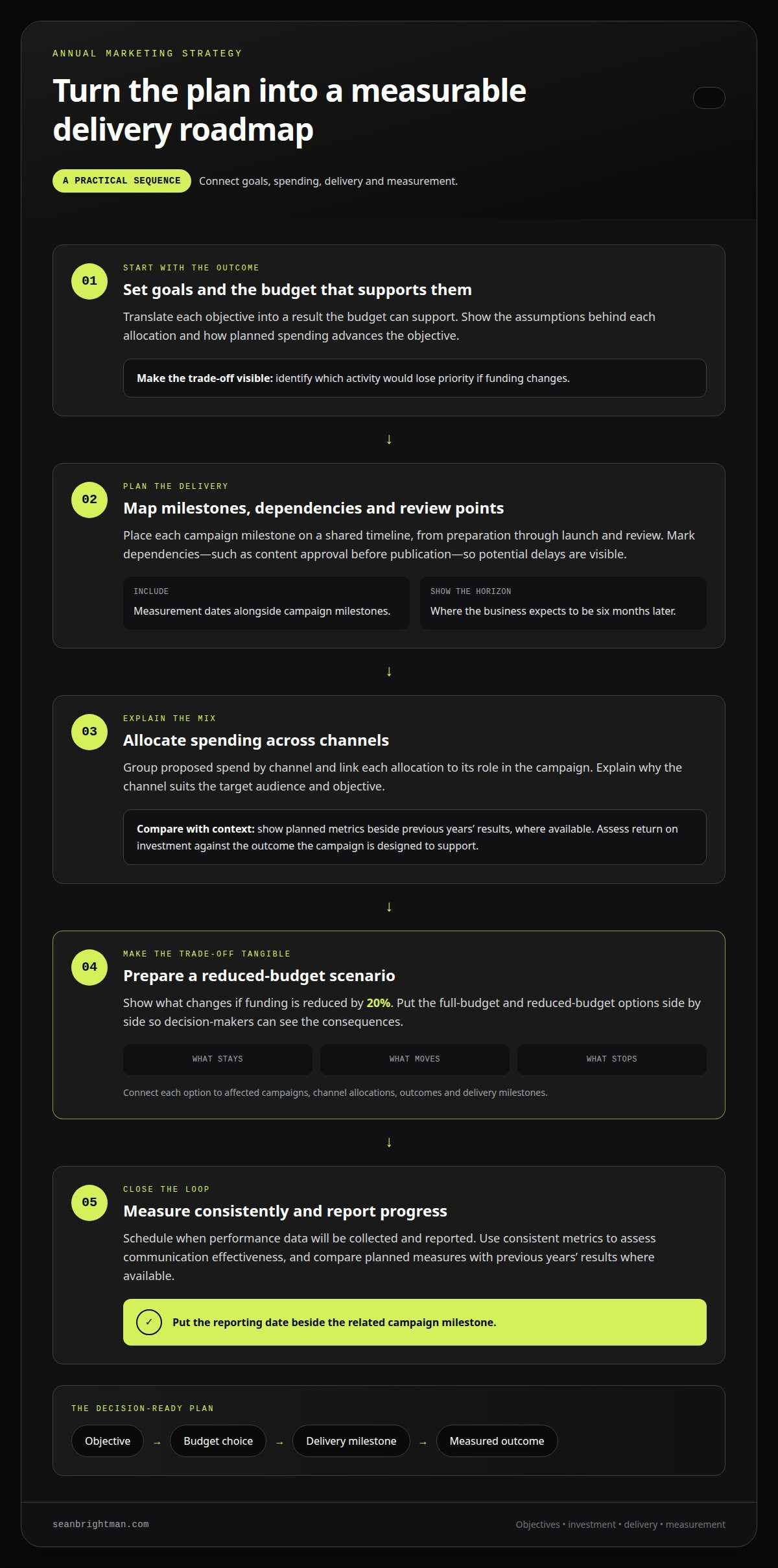
Connect objectives to a budget, delivery timeline and measurable outcomes. Compare planned metrics with previous years and report progress consistently. UK Government guidance recommends consistent metrics to assess communication effectiveness.
Translate each objective into a result the budget can support. For example, connect a customer-retention objective to the campaigns, channels and resources needed to pursue it. This makes trade-offs visible and gives decision-makers a reason to approve or reshape spending.
Show the assumptions behind each allocation, including what the campaign needs to run. Don’t present a budget as a standalone total. A clear summary shows how planned spending supports objectives and which activity would lose priority if funding changes.
Place each campaign milestone on a shared timeline, from preparation to launch and review. Mark dependencies, such as content approval before publication, so delays become visible before they disrupt delivery. A roadmap can also show where the business expects to be six months later.
Use the timeline to schedule measurement, not just activity. UK Government guidance notes that timelines can help determine when to collect performance data. Set each collection point alongside the related campaign milestone, then show the reporting date in the presentation.
Group proposed spending by channel and connect each allocation to its role in the campaign. Use charts to show the distribution, then explain why each channel suits the target audience and objective. Assess return on investment against the outcome the campaign is designed to support.
Keep comparisons practical: show planned metrics beside previous years’ results, where available, and explain what the figures mean for the next decision. A chart should clarify trade-offs, not imply that a channel works independently of the wider marketing mix.
Prepare a clear alternative before presenting the budget. Show what changes if funding is reduced by 20%, including which campaigns, channel allocations or outcomes would be affected. That scenario lets decision-makers assess consequences instead of cutting spend without a plan.
Present the full-budget and reduced-budget options side by side. State what stays, what moves and what stops in each version. A marketing roadmap can help connect those choices to delivery milestones and measurement.
Build the plan on market evidence, then connect each audience insight to an objective and practical action. This keeps tactics grounded in who you need to reach and why.
Start with focused market analysis, using SWOT or PEST to frame relevant conditions. Identify the opportunity, competing alternatives and customer needs that shape your plan. Don’t treat broad market trends as proof that every buyer wants the same thing.
Define the target audience using evidence, such as customer research and existing engagement data. For example, compare how audience groups respond to social media with those arriving through Google. Use the differences to guide channel choices, rather than assuming one channel suits everyone.
Turn useful audience evidence into buyer personas that describe real decision patterns. Include demographic and psychographic characteristics, shopping practices, channel use and responses to advertising. A persona should help the team decide what message to deliver and where, not become a fictional biography.
For example, distinguish a research-led buyer who compares options from a returning customer seeking a straightforward repeat purchase. Connect each persona to content and an action that fit its behaviour. Refresh the profiles when campaign responses reveal a meaningful change.
Choose three to five core business objectives for the marketing plan presentation. Make each specific enough to guide a decision, such as improving customer retention or attracting a defined audience. Link every objective to the business goal it supports.
Separate outcomes from activity. “Publish social media content” describes a task; attracting qualified enquiries describes an intended outcome. State the starting point, desired direction and measure for each objective, so the team can judge progress rather than simply count completed tasks.
Organise the plan into two to four strategic initiatives, each tied to an audience and objective. Explain why the strategy fits the market evidence, then list the tactics that put it into action. The 7Ps can help structure decisions across product, price, place and promotion, alongside the other elements.
For example, a retention initiative might use customer-focused email content and supporting social media posts. Specify the content type, channel and intended audience for each tactic. Don’t add activity without a clear purpose: every action should advance an initiative and be easy to assess.
KPIs make an annual marketing plan accountable, not just ambitious. Define a measure, owner and review action for every objective.
To develop a KPI-led roadmap with clear ownership, build your marketing roadmap.
Sean Brightman helps turn marketing strategy into clear priorities, decisions and next steps. When objectives, budgets and KPIs feel disconnected, Roadmapping can bring them together in a coherent plan. An Advisory Retainer provides ongoing strategic input as priorities shift and performance reviews raise new questions.
For teams assessing how AI could support marketing work, AI Consulting can clarify where it fits the strategy. The right next step depends on the challenge: planning a new direction, keeping execution aligned or evaluating AI’s role. The focus is on practical choices and accountable action, not another deck that sits untouched.
Contact Sean Brightman to discuss your marketing strategy.
The real test starts after approval: does the plan shape decisions people make each week? Treat the annual marketing strategy presentation as a working commitment, not a finished document. When priorities shift, update the choices and keep the reasoning visible. This gives the team a practical basis for action without losing sight of the agreed direction.
Sean Brightman offers Fractional CMO support, AI Consulting and Roadmapping for businesses that need to align strategy with action. These services suit different challenges, from setting marketing direction to assessing AI’s role or structuring a plan. Choose the conversation that matches the decision in front of you.
Contact Sean Brightman to discuss your strategy. A clear next step can turn a presentation into purposeful progress.
Include the decisions leaders need to make, not every detail behind the work. An annual marketing strategy presentation can include a decision log showing the choice required, the person responsible and the approval deadline. Note assumptions that could change the plan, such as a product launch date moving. This helps the team distinguish firm commitments from proposals still awaiting a decision.
Arrange the slides so each section answers a natural follow-up question: what is changing, what should the business do, and what decision is needed now? Put supporting detail after the core argument instead of opening with background data. For a leadership meeting, end with a short list of approvals and unresolved decisions. This gives attendees a clear route from discussion to action.
Start with a business priority and define the marketing contribution it needs. For example, if the priority is improving repeat purchases, choose a measure that reflects returning customers rather than general website visits. Add a data source and reporting owner to each KPI. Before setting a target, check that the team can collect the measure consistently and act on the result.
Compare external signals with evidence from your own customers before changing direction. Review competitor messaging, offers and channel activity, then note what appears to be changing and what remains consistent. Check those observations against customer feedback, sales conversations and search behaviour. The aim isn’t to copy a rival; it’s to identify a customer need your positioning may be missing.
Group customers by meaningful differences in needs, buying behaviour or decision barriers. For example, distinguish first-time buyers who need product education from returning customers who already understand the offer. Check whether each segment needs a distinct message or journey. If two groups respond to the same proposition and action, splitting them further may add complexity without improving campaign decisions.
Start with audience needs and the campaign outcome, then choose channels that can deliver the right message in context. Give each campaign a brief covering its audience, proposition, content, owner and intended action. Map dependencies such as asset approval or landing-page preparation. This reveals operational gaps early and helps teams coordinate campaigns instead of competing for the same resources.
Reading is good. A roadmap is better.