TL;DR: Founders hiring a Fractional CMO often expect polished strategy decks. What they actually need is someone who fixes the operational leaks, captures missed leads, and delivers measurable results within the first 30 days.
Most businesses are losing real money through missed leads and broken follow-up processes.
A Fractional CMO’s first job is to stop the bleeding, not write a beautiful strategy document.
Real traction in 30 days means fewer missed leads, faster response times, and time saved.
Systems beat strategy every time. Consistent execution beats a brilliant plan gathering dust.
If they’re still building PowerPoints in week four, you’ve hired the wrong person.
I’ve watched this pattern play out more times than I can count.
A founder brings in a Fractional CMO. They’re expecting polished PowerPoint presentations. Market analysis. Competitor research. A comprehensive 90-day roadmap with colour-coded phases.
What they actually need is someone to stop the bleeding.
The hardest part isn’t the marketing strategy. It’s the business you’re plugging it into.
Most businesses are messy behind the scenes. Inconsistent pricing. Unclear processes. Weak follow-up. Poor sales skills. Lack of structure. Missed opportunities everywhere.
You can respond to leads instantly with the fanciest tools in the world, but if your operations are broken, you’re just exposing bigger problems faster.
I’ve seen businesses missing just a handful of leads a week. Sounds minor until you calculate the annual revenue sitting in that gap. If you’re missing 10 to 20 leads monthly, that’s real money disappearing.
A strategy deck won’t fix that.
But capturing those leads will. Immediately.
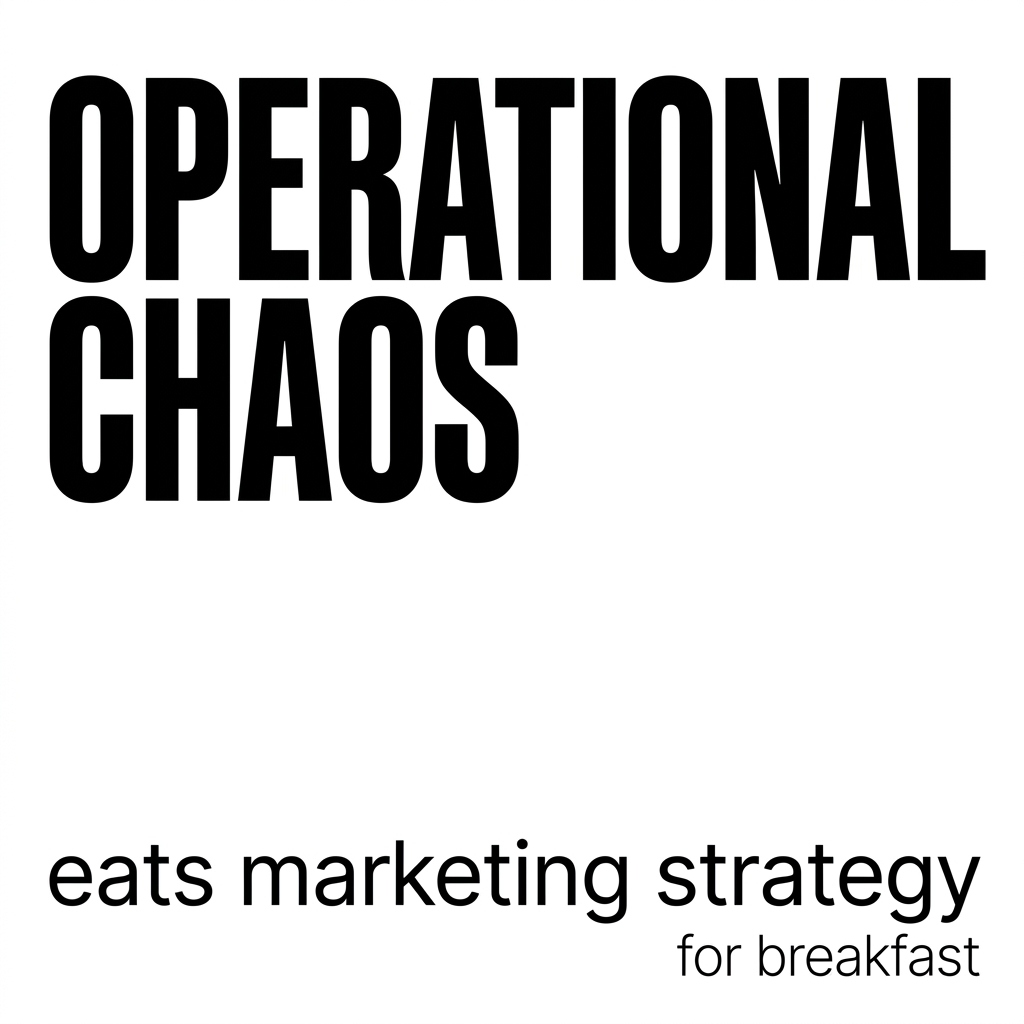
Bottom line: operational chaos eats marketing strategy for breakfast. Fix the foundations first.
Founders expect quick wins but resist the consistency required to achieve them. They want the marketing magic without the operational discipline.
This creates a tension that kills most Fractional CMO engagements before they start delivering value.
You’re not just installing a marketing function. You’re fixing operations, managing expectations, and proving value in ways that aren’t always immediately visible.
The value proof extends beyond what shows up in your analytics dashboard in week one.
Bottom line: the expectation gap between founders and Fractional CMOs is where engagements go to die. Closing it early is everything.
Real traction in the first month isn’t a beautiful brand strategy presentation.
It’s identifying where leads are falling through the cracks and plugging those holes. Fast.
Here’s what I focus on:
I don’t start with market research. I start with your current reality.
How many leads are you getting? What happens to them? Where do they disappear? What’s a new customer actually worth to you? What percentage do you win?
Most businesses can’t answer these questions with any precision. That’s the problem.
Once a website is built, it just sits there. It doesn’t bring leads on its own.
I implement the basics that should already exist but don’t. Lead capture forms that actually work. Follow-up sequences that run automatically. A system to track what’s happening to every enquiry.
This isn’t glamorous work. But it’s where money gets made or lost.
You don’t need just a website. You need the marketing engine behind it.
I build the whole system to get leads and the tools to nurture them to close. Not isolated tactics. Not random campaigns. A system that works together.
This means integrating your CRM properly. Setting up automation that actually saves time instead of creating more work. Making sure your team knows what to do when a lead comes in.
By week four, you should see measurable changes.
Fewer missed leads. Faster response times. More appointments booked. Less time spent on manual admin.
I worked with a founder who was managing every new enquiry manually, chasing leads through email threads and spreadsheets, deep into the evening. After we put the system in place, everything was tracked, followed up automatically, and visible at a glance. The late-night chaos stopped.
That’s traction. That’s value you can feel.
Bottom line: 30 days is enough time to plug the leaks, build the engine, and show real results. No deck required.
Strategy decks make everyone feel productive. They look impressive in board meetings. They give the illusion of progress.
But they don’t capture leads. They don’t book appointments. They don’t free up your time.
The gap between a beautiful strategy and actual implementation is where most marketing efforts die.
Founders don’t need another person telling them what could work in theory. They need someone who makes things work in practice, with the messy business they actually have, not the idealised version in the strategy deck.
Bottom line: a strategy deck is a comfort blanket. What moves the needle is implementation.
In reality, you’re not just installing a marketing tool.
You’re fixing operations. Managing expectations. Proving value in ways that aren’t always immediately visible.
This is the part that transforms a Fractional CMO engagement from “nice to have” to “how did we survive without this?”
When I interview clients, I record the conversation, transcribe it, and break down what needs to happen. What the system should do. What it shouldn’t do. What frequently asked questions need answers.
Then I build it. Test it. Refine it.
Some clients start out sceptical. They wonder why they need this kind of thing. But once they see a demo presented as if it’s on their own website, they see the benefit.
They’re surprised how natural it sounds. How it keeps up with conversations. How it actually works.
Bottom line: the operations overhaul is unglamorous, often invisible, and completely non-negotiable.
You can’t improve what you don’t measure.
In the first 30 days, I establish the metrics that matter:
Lead volume and source
Response time to enquiries
Conversion rate from enquiry to appointment
Time saved on manual processes
Revenue per lead
These aren’t vanity metrics. They’re the numbers that tell you whether your marketing is actually working or just making noise.
Most businesses don’t track these properly. They have a vague sense that “things are going okay” or “we’re busy” but no hard data.
That changes in month one.
Bottom line: if you’re not measuring it, you’re guessing. And guessing is expensive.
Here’s something that’s changed the game: technology that used to be exclusive to big companies is now accessible to small businesses.
AI tools. Marketing automation. CRM systems that don’t require a dedicated IT team.
This shift means a Fractional CMO can implement enterprise-level systems for founders and SMEs in weeks, not months.
The barrier isn’t the technology anymore. It’s the willingness to actually use it consistently.
Bottom line: the tools are there. The only thing standing between you and a proper system is the decision to use it.
Owners expect quick wins but resist the consistency that makes those wins sustainable.
A brilliant strategy executed inconsistently loses to a mediocre strategy executed relentlessly.
In the first 30 days, I don’t just set up systems. I make sure your team understands them. I make sure they’re simple enough to actually use. I make sure adoption happens, not just installation.
The best system in the world is worthless if it sits unused after the initial excitement wears off.
Bottom line: installation is easy. Adoption is the hard part. That’s where real Fractional CMO value lives.
If you’re hiring a Fractional CMO, here’s what you should see in the first 30 days:
Immediate lead capture improvements. Fewer enquiries falling through the cracks. Faster response times. Better tracking of where leads come from and what happens to them.
Time savings for you and your team. Less manual admin. Fewer late nights trying to organise appointments. More time to actually run your business.
Clear metrics and reporting. You should know exactly how many leads you’re getting, what they’re worth, and what percentage you’re converting. No more guessing.
A system that works without you. The goal isn’t to create more work for you. It’s to build something that runs smoothly whether you’re there or not.
Proof of concept, not promises. You should see evidence that things are working. Real appointments booked. Real leads captured. Real time saved.
If your Fractional CMO is still building PowerPoint presentations in week four, you’ve hired the wrong person.
Bottom line: demand results, not reports. Traction is visible. Excuses aren’t.
The value of a Fractional CMO isn’t in their ability to create impressive strategy documents.
It’s in their ability to diagnose what’s broken, fix it quickly, and prove the value through measurable results.
It’s in understanding that most businesses don’t need a rebrand or a new positioning statement. They need to stop losing leads. They need to respond faster. They need systems that work.
It’s in recognising that you’re not just installing a marketing function. You’re fixing operations, managing expectations, and building something sustainable.
The first 30 days set the tone for everything that follows. Get them right, and you build trust, momentum, and results. Get them wrong, and you’re just another consultant who promised transformation and delivered presentations.
Once the foundations are solid, then you can think about strategy.
Once leads are being captured and followed up properly, then you can optimise the messaging.
Once the system is working, then you can scale it.
But you have to earn the right to think strategically by proving you can execute tactically first.
That’s what real traction looks like in 30 days. Not a strategy deck. Not a roadmap. Not a vision statement.
Fewer missed leads. More appointments booked. Time saved. Money made.
Everything else is just noise.
Tangible results: fewer missed leads, faster response times, working lead capture systems, and clear metrics. Not PowerPoint presentations.
Because strategy decks look like progress. They’re polished, comprehensive, and impressive in meetings. They just don’t capture leads or book appointments.
By auditing what’s broken in week one, fixing the obvious leaks in week two, building the system in week three, and showing measurable results by week four.
Lead volume and source, response time to enquiries, conversion rate from enquiry to appointment, time saved on manual processes, and revenue per lead.
Usually because of the expectation gap: founders want quick wins but resist operational discipline. The CMO spends too long on strategy and not enough time on implementation.
The tools are now accessible and affordable for small businesses. The barrier isn’t cost or complexity. It’s consistent use.
After the foundations are solid. Once leads are captured, followed up, and the system is working, then you optimise messaging and scale. Strategy before foundations is just noise.
A good one fixes your operations and shows measurable results within 30 days. A bad one is still building presentation slides in week four.
Founders expect strategy decks. What they need is someone to stop the operational bleeding first.
Real traction in 30 days means fewer missed leads, faster responses, and time saved, not a polished deck.
A Fractional CMO’s first job is to audit the chaos, plug the leaks, and build a system that works.
Consistent execution of a simple system beats a brilliant strategy that never gets implemented.
The right metrics (lead volume, response time, conversion rate, revenue per lead) tell you whether marketing is working or just making noise.
Technology barriers are gone. The only thing left is the discipline to use the tools consistently.
Earn the right to think strategically by proving you can execute tactically first.
Reading is good. A roadmap is better.