

AI marketing isn’t one magic platform. The practical AI marketing tools for 2026 are specialised tools that help with writing and repurposing content, automating workflows, and creating design and video assets. They speed up defined tasks; they don’t replace the judgement needed to set strategy or approve the work.
The appeal is clear: less repetitive work and more time for decisions that move marketing forward. But adding tools without giving each one a clear role can create complexity rather than remove it.
This guide compares the main options so you can match a tool to the work you need done. You’ll learn where writing, automation, design and video tools can help, where human review matters, and how to choose a practical starting point. No hype, just a clearer way to build a setup around your team’s priorities.
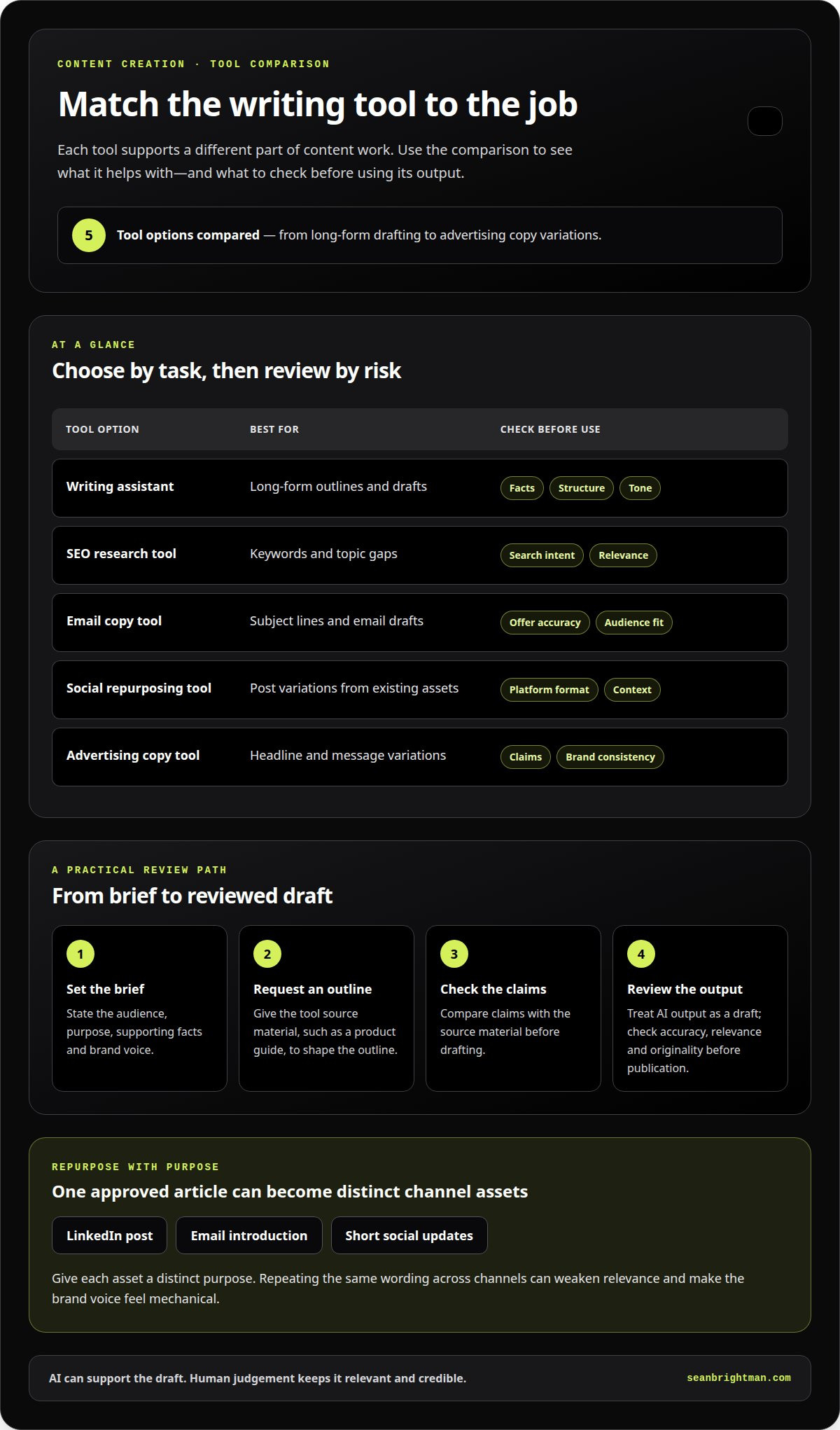
For content creation, use writing assistants for outlines and drafts, SEO tools for keyword research, and dedicated tools for email, social posts and advertising copy. Each serves a different purpose: a search-led article needs structure and evidence, while an email needs a clear offer and next step.
Start with a brief that sets out the audience, purpose, supporting facts and brand voice. Ask the tool for an outline, then check its claims against your source material before drafting. For example, provide a product guide and request a comparison article outline, rather than unsupported product claims.
SEO tools can group related keywords, surface search questions and flag missing subtopics. Use these findings to shape your content strategy, not as a prompt to repeat a keyword in every paragraph. Check recommendations against search intent, then add original examples and expertise to make the page useful.
| Tool option | Best for | Check before use |
|---|---|---|
| Writing assistant | Long-form outlines and drafts | Facts, structure and tone |
| SEO research tool | Keywords and topic gaps | Search intent and relevance |
| Email copy tool | Subject lines and email drafts | Offer accuracy and audience fit |
| Social repurposing tool | Post variations from existing assets | Platform format and context |
| Advertising copy tool | Headline and message variations | Claims and brand consistency |
Repurpose an approved article into a LinkedIn post, an email introduction and several short social updates. Give each asset a distinct purpose. Repeating the same wording across channels can weaken relevance and make your brand voice feel mechanical.
Risks include factual errors, biased wording and material that resembles existing work. Check claims against reliable sources, look for stereotyping in examples, and assess originality before publication. Treat AI output as a draft, not proof that content is accurate or safe to use.
Start with your bottleneck: use SEO research if topic planning is weak, or a writing assistant if drafting is slow. Keep a human review step between generation and publication.
Automation tools range from focused email personalisation to platforms that link customer records, campaigns and follow-up tasks. Choose based on workflow complexity, integration needs and the human checks each process requires.
Email tools use customer segments and campaign behaviour to tailor messages, schedule sends and trigger follow-ups. Unlike broader platforms, they focus on inbox engagement rather than coordinating every customer touchpoint. A small retailer might send a relevant product email after a purchase, with a review step to check accuracy and tone.
For UK campaigns, design data handling around UK GDPR and PECR, including lawful data use, consent and marketing preferences. Make sure suppression preferences apply to every automated send.
CRM automation links customer records with email and campaign activity. A visit to a landing page, for example, could trigger a relevant follow-up and update the customer’s record. Unlike email-only automation, CRM automation coordinates information across the customer journey. Tools may connect with Shopify, HubSpot, Salesforce or WordPress through specific integrations, so map the required data flows before choosing one.
Measure results against a baseline, using qualified leads, conversions and revenue attributed to the campaign. A comparison group can help distinguish campaign impact from other changes.
Workflow tools connect steps across marketing tasks, such as turning an approved blog post into a review task and routing images and copy for publication. Unlike CRM automation, they focus on hand-offs between processes. Set clear instructions, assign approval points and test each path before scaling. AI agents can assist with repetitive steps, while strategic judgement remains important.
A small UK business can pilot one workflow, track time saved and error rates, then decide whether to expand it.
Platforms that combine campaign management, customer data, email and reporting can require more setup than a focused tool. Test ease of use with a real task, such as segmenting contacts and scheduling a campaign. Claude may help draft workflow instructions, but the platform’s features and integrations determine what it can actually do.
Free plans and paid tiers vary by platform, features and usage. Assess value through adoption and measured outcomes, not the feature list alone. A market estimate suggests AI-driven personalisation can produce three times higher email response rates; measure performance against your own baseline.
Creative tools turn existing footage, product information and campaign briefs into video, images and advertising drafts. They can speed up asset creation, but the output still needs editing for accuracy, pacing and brand fit. Start with one approved source asset and define its audience, channel and intended action.
A 45-minute podcast can be turned into six polished short-form clips in under thirty minutes using video-production tools. That gives a team several drafts to review, not six finished campaign assets. Check each clip’s context, captions, opening and ending before publishing.
For image and graphic generation, describe the subject, format, visual style and intended placement. A product launch brief might specify a square social graphic and a separate website banner. Manually check generated text, colours and product details, especially where an image could misrepresent the item.
AI advertising tools can generate alternative headlines, layouts and calls to action from a campaign brief. For example, draft versions focused on product benefits, customer needs and seasonal relevance. Compare them against the same campaign objective, and remove any claims the business can’t substantiate.
Video tools can assemble clips, add subtitles or suggest edits from a script. Use them for repeatable production tasks, such as cutting a product demonstration into shorter formats. Keep a human editor responsible for timing, pronunciation, visual accuracy and the final decision about what gets published.
Google campaign assets need the same scrutiny as social creative. Check that generated headlines match the landing page and images represent the offer accurately. A mismatch can undermine the message after someone clicks, even if the creative looks polished.
Choose a tool based on the asset bottleneck. If filming is in place but editing slows production, test a video tool on one source recording. If design takes too long, test image generation against a real brief. Compare the manual editing required, consistency across drafts and usefulness of the final output.
Design and video tools can turn a brief into visual drafts, scripts and social media versions. Capabilities vary, so distinguish asset creation from final production. For a product launch, use one brief to draft a campaign graphic, a short video script and platform-specific layouts. Then check whether the output fits the audience and brand.
Start with clear inputs: the message, audience, channel and required format. Request a square social post and a landscape landing-page visual as separate versions. Check text placement, colours and product details against the original brief. AI can speed up iteration, but a human editor should make the final choices.
Everyday marketing assistants can handle smaller tasks in the creative process. They can turn meeting notes into a task list, draft a social media caption or summarise campaign analysis. Set a clear outcome for each request. For example, ask for three caption options based on an approved offer, rather than a complete campaign plan.
Grammar and style assistants can flag spelling errors, unclear phrasing and inconsistent tone in a draft. Use them after writing, not as a substitute for subject knowledge. Check every edit against the intended meaning: a tool might smooth a sentence while changing a product claim or removing a phrase that matters to your brand voice.
Keep the workflow simple: brief the tool, generate a draft, review facts and visual details, then edit for the channel and tone. Save the approved version as a reference for later assets. This gives you a clear comparison point if a new design or script changes the message.
If your team is choosing between creative tools and needs a joined-up plan, map your AI marketing priorities before adding another platform.
Sean Brightman helps businesses turn AI marketing choices into a clear plan through AI Consulting and Roadmapping. This support is useful when tool experiments are multiplying, teams lack priorities or automation isn’t tied to a defined marketing goal.
AI Consulting provides strategic guidance on where AI fits into your marketing operation and which challenges deserve attention first. Roadmapping creates a structured plan for setting priorities and sequencing next steps. For ongoing strategic input as your plans develop, an Advisory Retainer provides continued direction and accountability.
The aim isn’t to add tools for the sake of it. It’s to build a workable approach around your objectives, team and existing processes. Contact Sean Brightman to discuss your AI marketing priorities.
The next step isn’t another tool trial. It’s deciding which marketing decision or process needs to improve, then aligning your people, data and technology around that outcome. That gives your team a clearer basis for choosing practical AI marketing tools for 2026, and for judging whether they belong in your operation.
Sean Brightman offers Fractional CMO support, AI Consulting and Roadmapping to bring strategic direction to this work. These services are a fit when you need senior marketing leadership, clearer priorities or a structured plan for applying AI to business goals.
Bring the challenge you need to solve, not a platform you’ve already chosen. A focused conversation can clarify your next move and where to direct your attention.
Contact Sean Brightman to discuss your needs and take the next step with purpose.
AI for marketing uses software to analyse information, generate material or support decisions across marketing tasks. For example, a team might group customer feedback by theme, then use those findings to shape a campaign brief. The tool processes patterns or instructions; people set the objective, judge relevance and take responsibility for the final decision.
The right choice depends on the task your business needs to improve, not a universal ranking. A small team planning campaigns might prioritise a writing assistant, while a business managing repeat customer journeys might need CRM-connected automation. Before choosing, define the task, identify who will use the tool and decide how you’ll measure whether it improves the work. Start with fit, not features.
Writing assistants support outlines and drafts, SEO tools help with keyword research and topic gaps, and automation platforms connect campaigns, customer data and workflows. Test ease of use with a real task, such as segmenting contacts and scheduling a campaign.
A market estimate suggests AI-driven personalisation can produce three times higher email response rates. Measure performance against a baseline using qualified leads, conversions and attributed revenue; a comparison group can help isolate campaign impact.
Reading is good. A roadmap is better.